There were two new exhibits for the public.1. Unearthing the Legacy of Islamic Spain:
This exhibit explores how the Islamic monuments of the Iberian Peninsula became powerful symbols of Spanish culture and identity. Intricate wall paintings, drawings, and printed material from the 19th century reflect diverse perspectives on Spain’s long-lasting history of Muslim rule, from the arrival of the Umayyads in the 8th century until the expulsion of the last Nasrid Sultan in 1492.
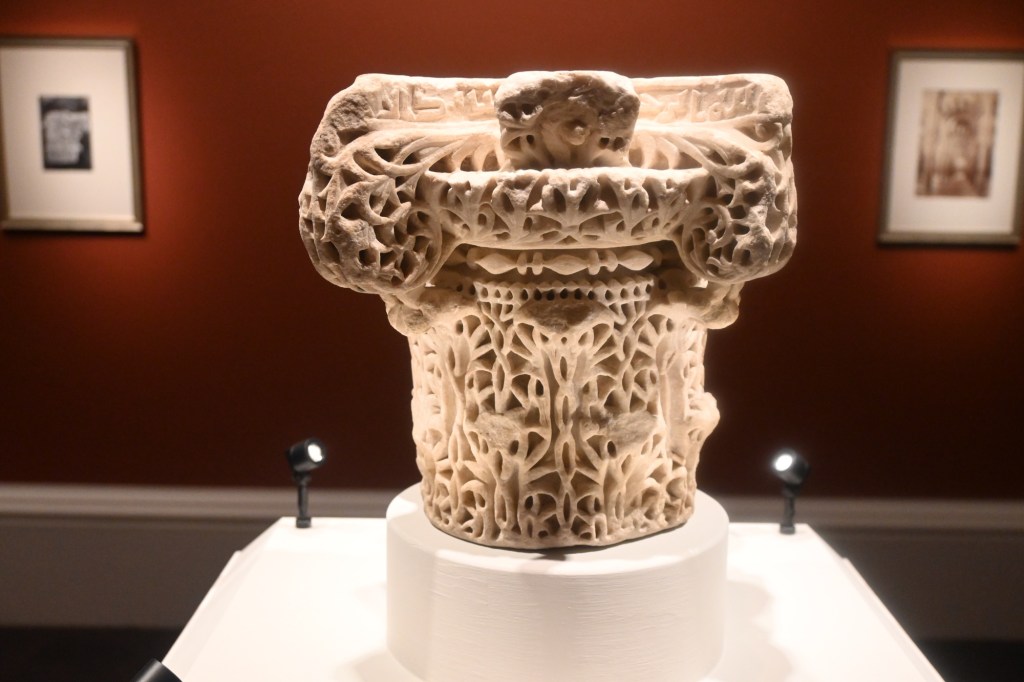
Anchoring the exhibition is one of the medieval treasures of the Museum: an ornate marble capital of the 10th century from the palace city of Medinat-al-Zahra, near Cardoba. Most of the materials and artisans were imported, and to me, there was a strong resemblance to the marble carvings at the Taj Mahal.
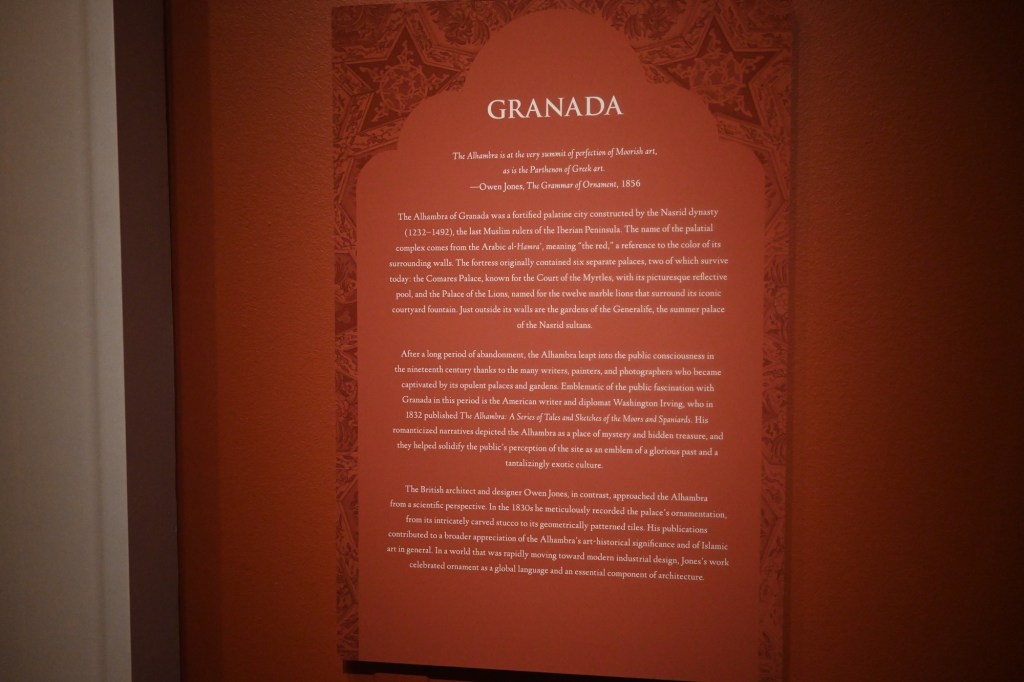
There were also some beautiful drawings of the Alhambra in Granada, depicting “the very summit of perfection of Moorish art, as is the Parthenon of Greek art “.
2. The Legacy of Vesuvius:
When 19-year-old Charles of Bourbon became King of Naples, Sicily, and later Spain, it was considered the Golden Age of art, despite the active volcano Mount Vesuvius looming in the background. With his wife, Queen Maria Amalia, they established the most vibrant and influential periods in the history of Art. The monarch’s diligent pursuit of ancient sculpture and painting spurred the discovery of the Roman cities of Pompeii, Herculaneum, and Stabiae. The eruption of Mount Vesuvius in 79 CE buried these sites but also preserved the exquisite Roman Art beneath the ash.
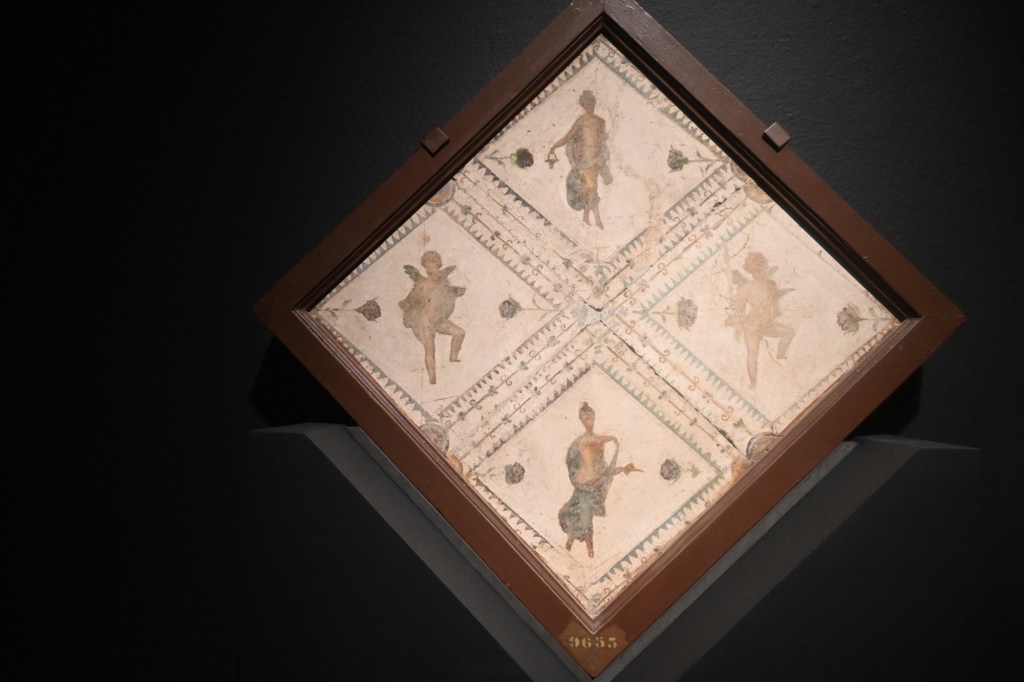
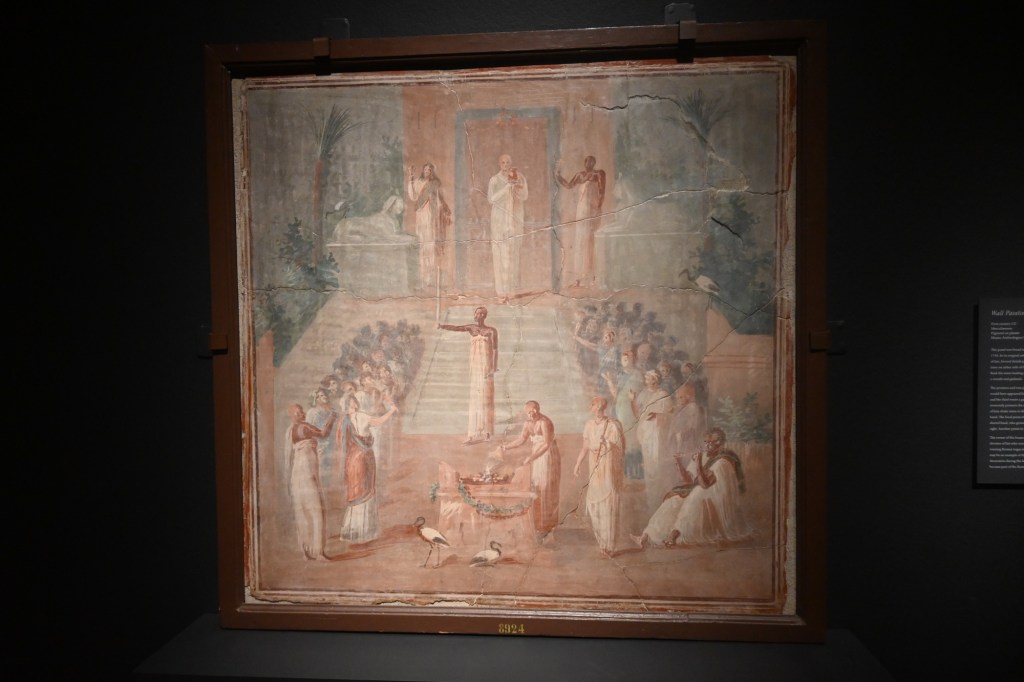
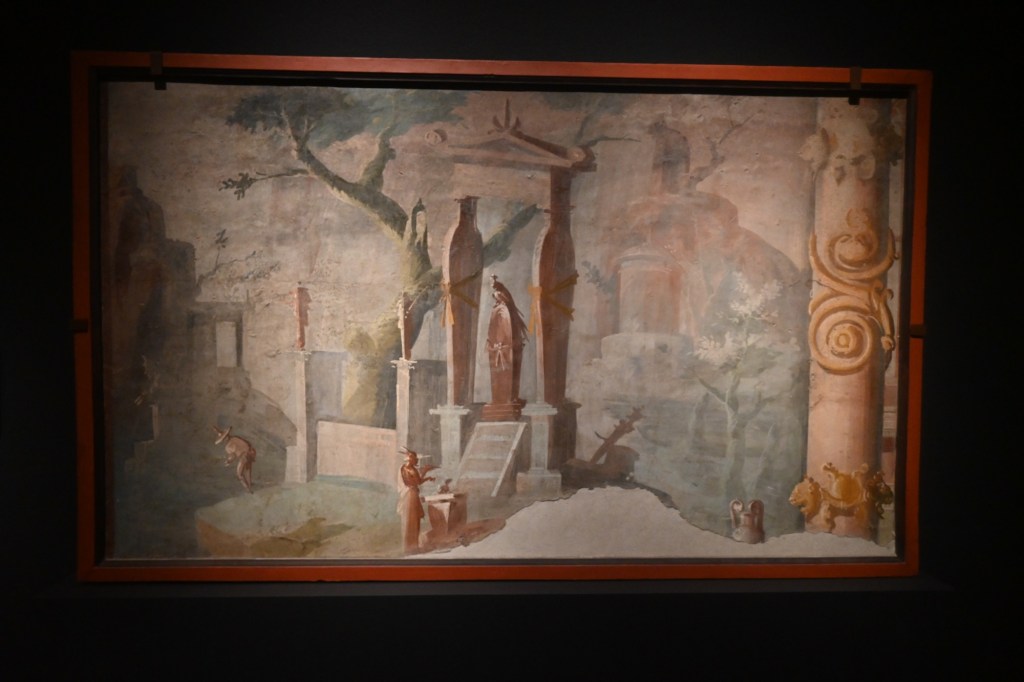
The exhibits were divided into two parts. One part included 18th-century paintings, porcelain, and prints unearthed after the Vesuvius eruption in 1779. Most of these can be seen in most European museums. The second part was the long-lost Roman artifacts of the ancient world. The 1st-century images show a Roman fascination with all things Egyptian when Egypt became part of the Roman empire. A unique diamond-shaped wall painting exemplifies the type of decoration known as “wallpaper style,” which gained popularity during that period. We see glimpses of the Temple of Isis. There is a wall painting with offerings in front of the Sarcophagus of the Egyptian god Osiris.

 RCN personal blog